
Hello Again!
From the Editors

Dear reader,
This is our first newsletter since we wrapped up The Daily, our guerrilla festival publication, last year. We’ve been quiet online, but behind the scenes, we’ve been busy developing our long-term plans and new projects.
The Daily was phenomenal, and we were personally moved by the interest and love that people sent our way. It brought together a wide range of voices, and the sheer diversity of topics and writing styles was one of the most beautiful things about that project. But the process was, frankly, less than ideal. We only started about two weeks before the festival, and every day, we rushed down to the printers to get each issue out. Our contributors really stepped up: they were ready with ideas for articles; helped us secure image permissions; and were on standby to address our comments, late into night. Still, within a compressed timeline, it was not always possible to have the kind of unhurried conversations that can yield new insights, or to mull over small but significant details, like a particular turn of phrase that can introduce a different meaning altogether.
Reflecting on our first project, we agreed that the editorial process must be a focus over the course of the year, when we do not have the pressure of churning out articles every day. We also recognise that the survival of CORRESPONDENCE cannot depend on the momentum of a festival alone, and hinges on our establishing a clear editorial direction. Sustaining a film writing platform, when so many others have closed, means addressing the larger structures and cultures surrounding arts writing in Singapore. Ambitious as it is, we have to attend to both demand and supply: we need to cultivate an audience, while nurturing a pool of writers and putting out a steady stream of quality writing.
This year we’re introducing two projects in service of these goals. The Longform, a monthly series led by Tracey, includes responses, interviews, profiles, and essays, all related to cinema in Singapore and Southeast Asia. These formats give our contributors the space to flesh out an argument and express their perspectives fully. Our call for pitches is open to everyone, including those with no prior experience in writing. With more AI-generated articles being released, our goal is not simply to produce a polished piece, but to underscore the humanity in writing. To us, if a piece can only be written by that individual, with their particular subjectivity, personal values, and unique brand of humour, it is a success.
Our series begins with a superb example of this — a personal essay by writer Sim Jia Ling on her evolving relationship with cinema. Jia Ling opens up about her discomfort with the term “cinephile” and the kind of sophisticated taste or exclusivity it connotes. Her piece will resonate deeply with anyone who has ever struggled with imposter syndrome.
In line with our mission to nurture film writing in Singapore, we also launched our first writing workshop, Roving Correspondents. Led by Sasha, the workshop is designed for emerging critics to immerse themselves in film culture and hone their personal voice. On top of penning traditional reviews, writers will track and document the evolution of a different community, space, or festival each cycle. This time, two selected writers, Lu Ann and Rafy Michael, will be attending a slate of regular programmes organised by the FFIGS collective, giving them an opportunity to consider how the experience of film can extend beyond the cinema.
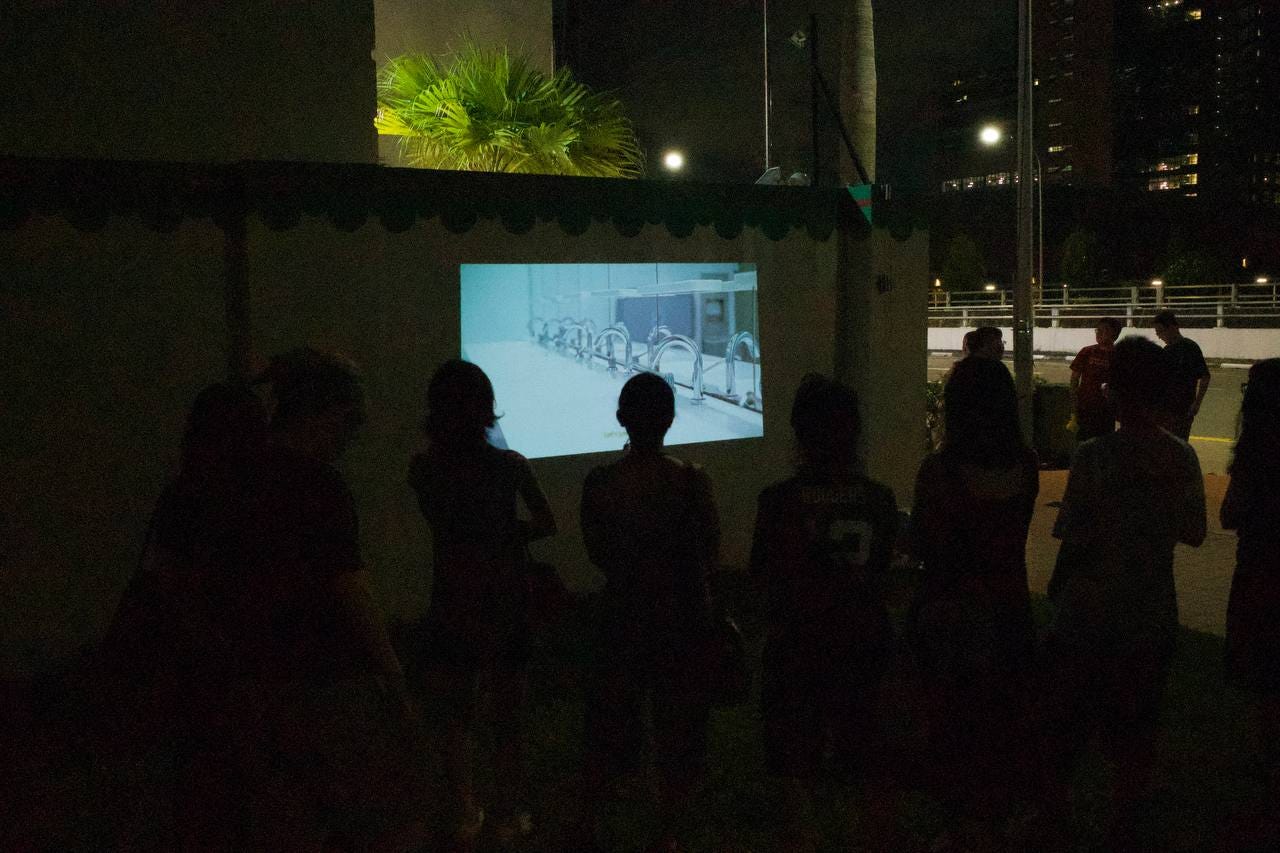
In the spirit of a call-and-response, our young writers will both reflect on the events and participate in an ongoing dialogue with each other. Their first dispatch on “A Contrary Communing of Cinema: Cruising Through Chinatown” was just published. In “Leaving the Movie Theatre”, Lu Ann provides an account of her heightened wariness while watching films in public. Rafy continues with “Brief Encounters”, charting his growing awareness as an outsider of the communities featured in the film walk.
Our latest pieces were developed independently, but a common point of discussion arose between them: the film scene can, admittedly, be quite exclusive. Even for cultural workers in the industry, many of us have felt at some point that we haven’t watched enough canonical films to earn our “cinephile” stripes, as Jia Ling notes. And as filmgoers, we might emphasise the representational value of media, without actively engaging the subjects represented onscreen, a point made by our Roving Correspondents. These pieces push us to think critically about the attitudes or conditions necessary for films to truly connect people, within and beyond the film community.
None of this is possible without financial backing, of course. We’re grateful to have secured funding from the National Youth Council, which is kindly sponsoring this year’s Longform series and Roving Correspondents workshop, allowing us to pay our writers and illustrator. A champion of our publication since day one, Phoebe Pua is also supporting us through her Not Boring Microfund. Her support means a lot to us, as The Daily was in a sense, the spiritual successor of Atlas, which she edited between 2022 and 2023.
We’re proud, and incredibly privileged, to help keep film writing alive in Singapore. 📮
Until next time,
The CORRESPONDENCE Team